The Catholic School of
St Gregory The Great
Computing Curriculum
 |
 |
 |
Intent
At St Gregory's, we are inclusive and recognise that everyone has their own unique God-given talents. Our curriculum is progressive and builds on prior knowledge, understanding and skills so that we develop our whole school community academically, spiritually, emotionally, morally and socially. This enables our children to develop cultural capital and become righteous citizens who give to society. We provide creative and engaging opportunities that inspire and motivate our children to become lifelong learners and aspire to be the very best they can be.
In Computing, we aim for all of our children to see themselves as computer scientists. We endeavour to inspire a sense of curiosity in our children and develop their enthusiasm for Computing, recognising that the skills and knowledge they learn through Computing can be used to have a positive impact on God’s world around them.
To be able to be a Computer Scientist, children will need to build the skills, knowledge and understanding of computing. They will need to understand and use the language of computing and apply these computing skills and knowledge across the curriculum, making connections both within computing and across other subjects too.
At St Gregory’s, we recognise the integral part that technology plays in our children’s lives and aim to equip children to become active and responsible participants in the ever-changing digital world. We are aware that our children’s access to technology outside of school varies widely and also of the barriers and stereotypes that exist in the world of Computing, particularly around gender and race. We therefore aim to inspire all children to consider themselves as the computational thinkers and computer scientists of the future. Furthermore, we aim to develop children’s perception of technology as a tool for learning, innovation and discovery, as well as helping them to understand the advantages and disadvantages associated with online experiences.
As such, we teach children to understand how computers work (Technology in Our Lives) as well as what measures can be taken to keep themselves and others safe online (Online Safety). Our curriculum focuses on Information Technology (Multimedia and Data Handing), Digital Literacy (Online Safety) and Computer Science (Programming and Technology in our Lives) and aims to give children a deep and broad knowledge through opportunities to apply skills in various digital contexts. Ultimately, all children leave St Gregory’s as confident, able and responsible Digital Citizens who are prepared for the technological challenges they will face in the future.
Implementation
The aims of the National Curriculum (2014) for Computing are to ensure children:To be computer scientists, children need to:
- understand and apply the fundamental principles and concepts of computer science, including abstraction, logic, algorithms and data representation
- analyse problems in computational terms, and have repeated practical experience of writing computer programs in order to solve such problems
- evaluate and apply information technology, including new or unfamiliar technologies, analytically to solve problems
- be responsible, competent, confident and creative users of information and communication technology.
 |
 |
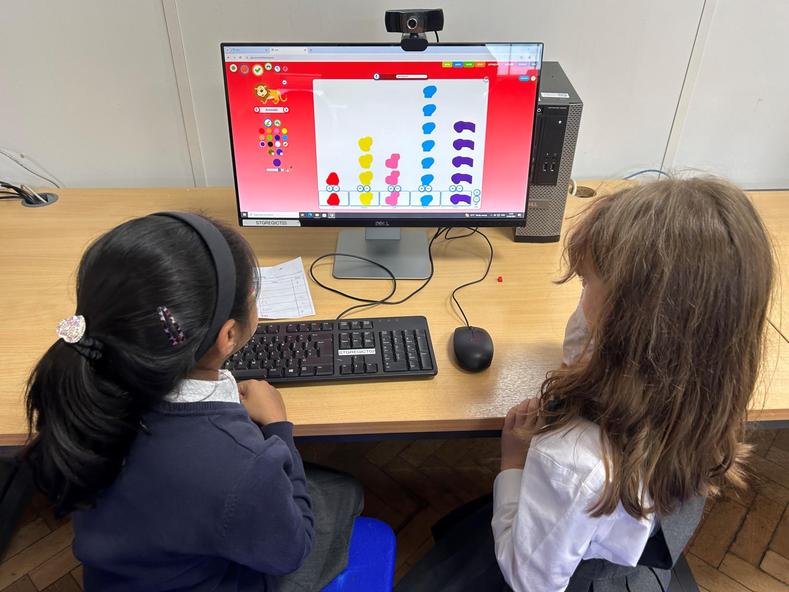 |
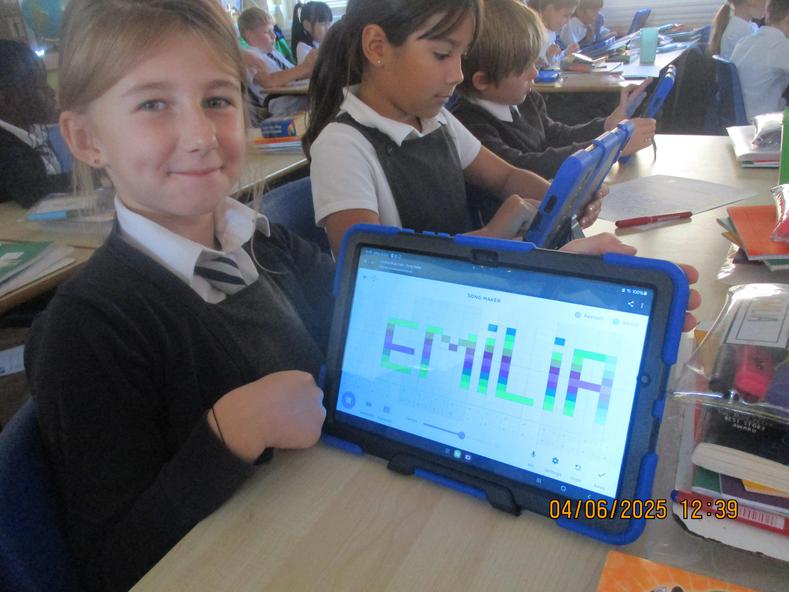
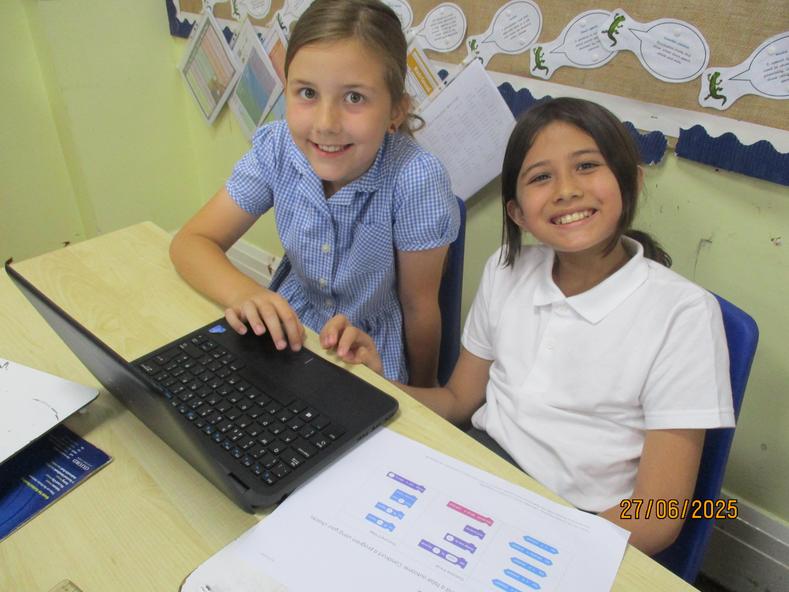
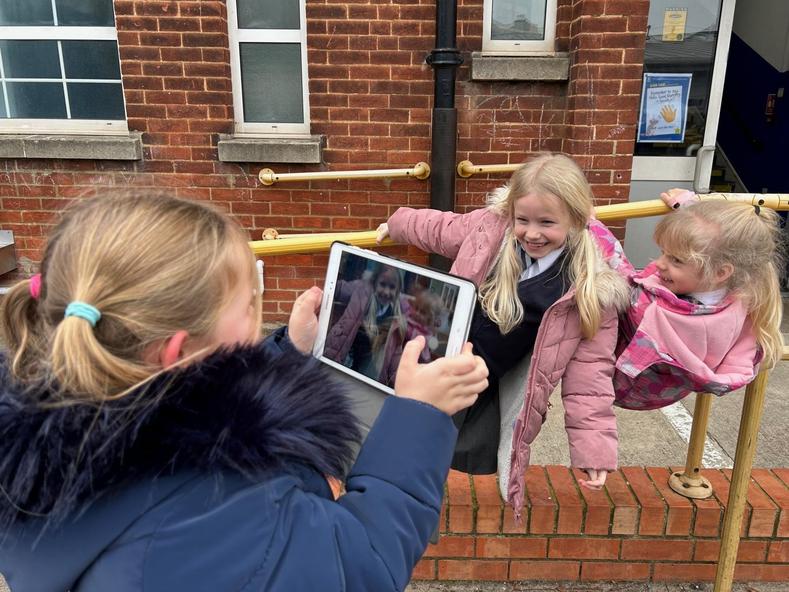
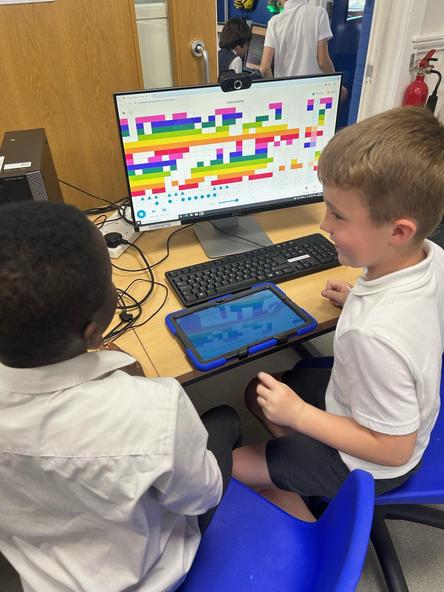
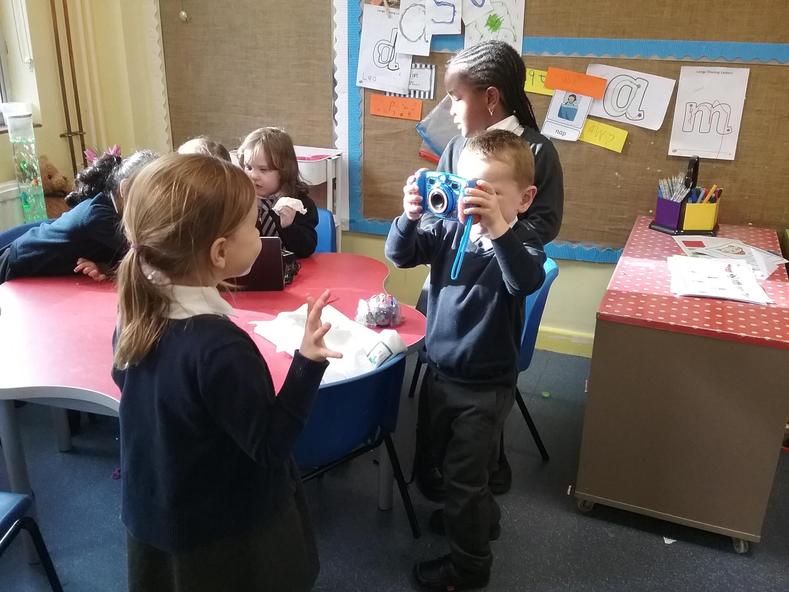
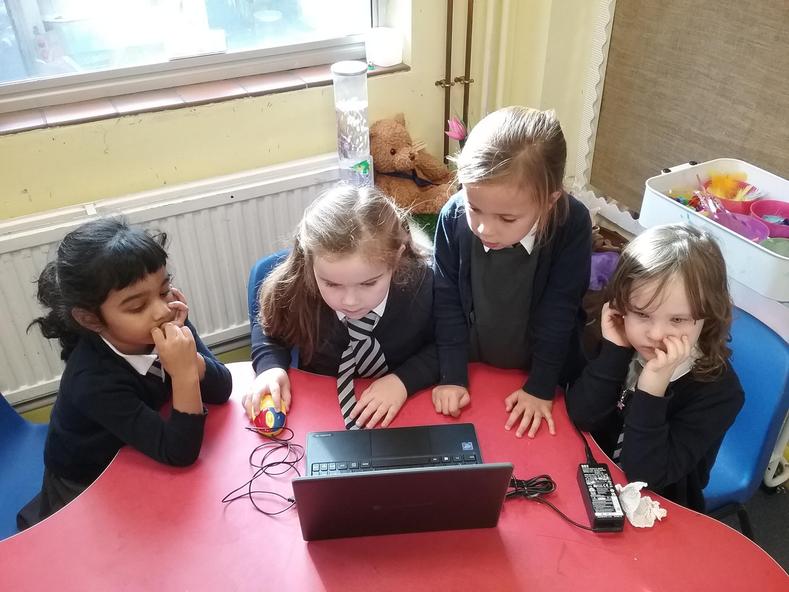
| Pupils getting creative; making videos, photos and coding their very own computer games! | ||
How we plan for progression in Computing at St Gregory’s:
In order to cover all skills and the technical knowledge computing is taught discretely. Computing is taught on a weekly basis for a minimum of one hour. All classes, including EYFS, are allocated a timetabled slot in the Computer Room. Further to this, additional slots are requested by teachers to support use of technology in the wider curriculum. Computing skills are further enhanced by the provision of additional equipment such as a class set of 30 laptops, Beebots, cameras and tablets.
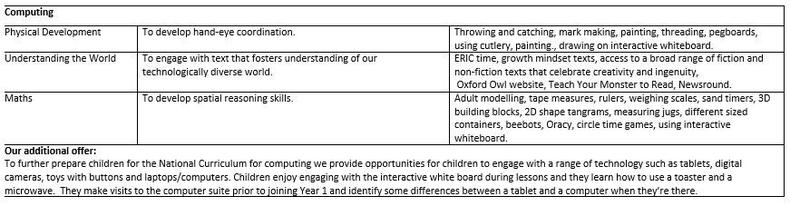
We recognise that foundations for becoming a computer scientist are laid in the Early Years Foundation Stage through all seven strands of the Early Year Framework and to be ready for the next stage in their education, the starting point that we strive for every child to have upon entry to Year 1 and working towards the aims of the National Curriculum is:
 |
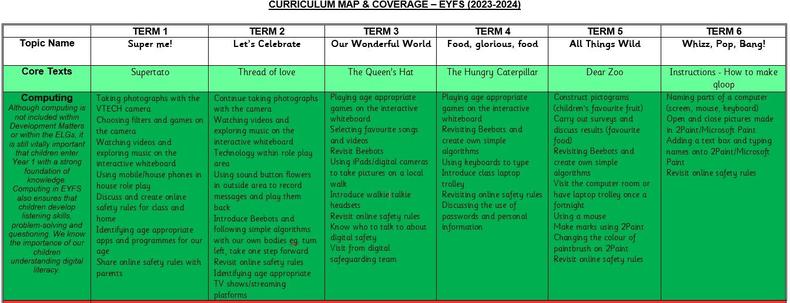
Our EYFS children participate in a range of computing activities to give them the skills and knowledge to be digitally literate individuals and prepare them for the Year 1 curriculum, some of these opportunities include:
We recognise that keeping our children safe is of paramount importance therefore we discreetly teach Online Safety in each term in EYFS:
|
|

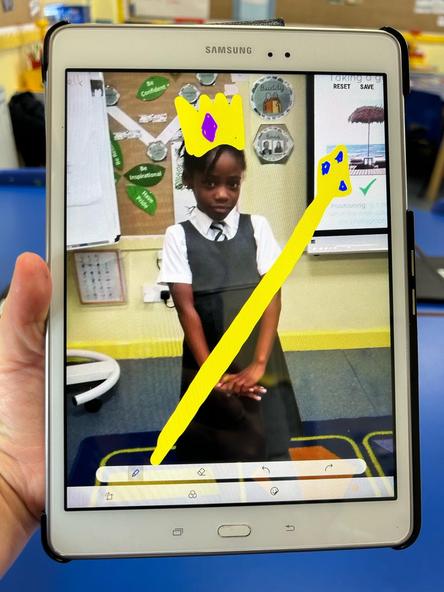
Once children enter Year 1, they work progressively towards the aims of the National Curriculum. To ensure progression, the teaching team worked together to plan out curriculum coverage and then the subject leader identified the progression of skills and vocabulary required at each stage of learning to prepare children for the next stage in their learning.
 |
 |
 |
Computing Curriculum Coverage
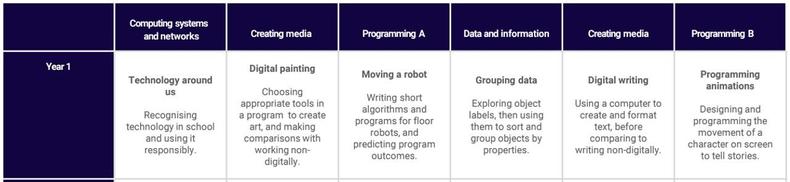
Coverage is based on the National Curriculum 2014 PoS with objectives allocated across year groups, to ensure a progression of knowledge, skills and understanding. Each academic year five units are taught including online safety, which is also taught in every year group including EYFS. In addition, Online Safety is also taught through PSHE and threaded through the other units within computing to ensure that our children are digitally safe.
Table shows Year 1 objectives (Note: Creating Media is a double unit):
Computing Progression of skills
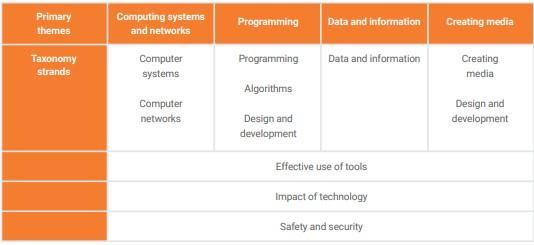
Within the Teach Computing Curriculum, every year group learns through units within the same four themes, (see table below).
 |
Teaching of Online Safety
We also teach Online Safety using a scheme (Project Evolve) for one discrete lesson at the beginning of every term. Project EVOLVE covers eight key areas, called "strands," to prepare your child for the digital world: In KS1 children will have one lesson from each of these themes:
- Rules and responsibilities: an introduction to the key principles for staying safe whilst online.
- Self-image and identity: Understanding how to present themselves online and the impact of their digital footprint.
- Online relationships: Learning about appropriate online behaviour and communication with others.
- Online reputation: Thinking carefully about how their online content may affect how others perceive them.
- Health, wellbeing, and lifestyle: Developing healthy habits around technology use and understanding its impact on mental health.
- Privacy and security: Learning to protect personal data and maintain online privacy.
In KS2 we continue with these strands but changing Privacy and security for Online Bullying which covers: Recognising and knowing how to respond to and report online bullying.
In addition, Online Safety is also threaded throughout the four core units. Online Safety is also taught through of RSE through the use of a scheme – Ten:Ten.
Computing Progression of Vocabulary
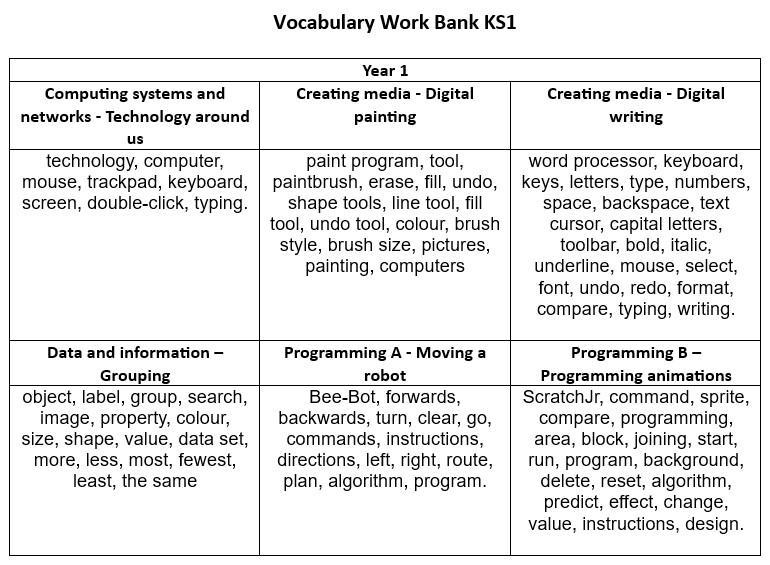
Vocabulary is paramount to the children’s understanding and ability to articulate their learning. Our curriculum is designed to enable children to learn and master new vocabulary, as a large proportion of our pupils speak English as an additional language we have purposefully emphasised vocabulary which is then regularly revisited to ensure deep of understanding for all learners. It is, therefore, a key consideration in Computing planning. Key subject vocabulary is introduced at the appropriate time, building on prior knowledge.
Table shows an example vocabulary work bank for KS1:
|
|
Computing Planning
All planning is carefully crafted to ensure the very best outcome for all learners. We use a scheme: Teach Computing to assist us in breaking down the learning objectives into smaller, manageable WALTs (We Are Learning To…). The scheme is adapted by the teaching team to ensure it meets the needs of all learners. Planning for Computing is based on agreed progression of concepts, skills and vocabulary.
Learning Journey for Years 1 to 6
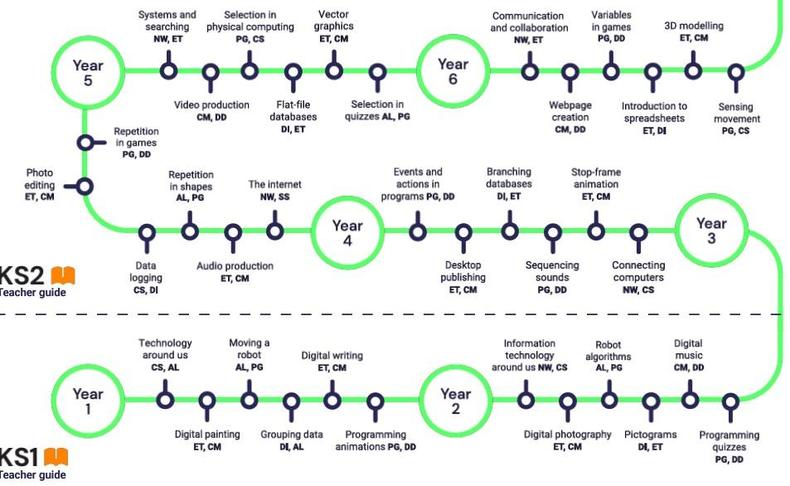
See Computing Vision for more information. Please also visit our Policy page to view the following policies:
- Computing Acceptable Use Policy
- Online Safety Rules - Polish
- Online Acceptable Use Policy
- Social Media Policy
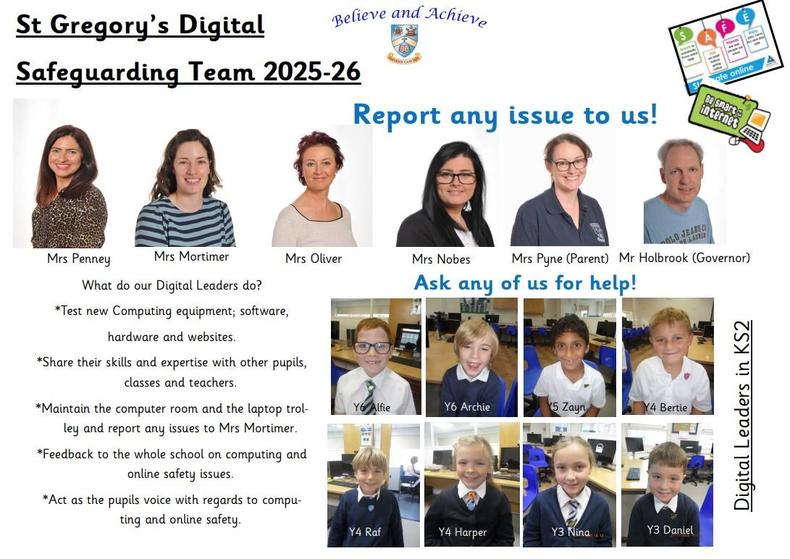
Our Digital Leader Team
A Digital Leader is a pupil who is part of a Digital Leaders Team within our school, whose role it is to support the use and to further the development of ICT in school.
The team is assembled upon application and interview, and meet regularly.
Pupils are then given training and support to develop specific areas of ICT expertise. These areas of expertise can be self-determined, or may be a particular request for a specific item of hardware or software.
Once a pupil gains an area of expertise, staff may then request the use of the Digital Leader for a variety of different functions.
As part of a team, the Digital Leaders perform the following roles within school:
- Test new ICT resources, which could be websites, software or hardware.
- Share their skills and expertise with other pupils, classes and teachers.
- Maintain the ICT suite and monitor any problems.
- Feedback to whole school on computing issues
- Act as the student voice with regards to computing and online safety
- Attend visits and competitions to enhance their own computing knowledge and skills, and represent our school community.
In the future we hoping to get the children involved in:
- Blogging on behalf of the School a class or club.
- Update areas of the school website.
- Lead ICT lunchtime clubs.
• Work with children from other schools on specific projects.