The Catholic School of
St Gregory The Great
English Writing Curriculum
 |
 |
 |
Intent
Aims of the Writing Curriculum
At St Gregory’s, our writing curriculum is rooted in the belief that every child is a unique individual, created with God-given talents and the capacity to make a positive difference in the world. Writing is a powerful tool through which children learn to express themselves, share ideas, deepen their understanding and shape the world around them. We aim for every child to recognise themselves as an author and to experience the joy and purpose of written communication.
Our writing curriculum aims to:
1. Develop Skilled, Fluent and Independent Writers
- Ensure children build secure skills in transcription (handwriting and spelling) and composition so that they can write with accuracy, fluency and confidence.
- Equip pupils with the ability to write clearly, coherently and effectively, adapting tone, style and vocabulary for a wide range of audiences and purposes.
- Support children in planning, drafting, revising and editing their work so they become reflective, independent and resilient writers.
2. Inspire a Love of Writing Through a Love of Reading
- Strengthen the intrinsic link between reading and writing, using high-quality texts and authors as models that inspire children’s own writing.
- Develop an appreciation for the richness and power of language and help children understand how writing can inform, persuade, entertain and influence our world in positive ways.
3. Foster Curiosity, Creativity and Critical Thinking
- Encourage children to explore the written word with curiosity and imagination.
- Provide rich, creative and engaging experiences that motivate pupils to write with purpose and passion across a wide range of genres.
4. Build Knowledge of Language and Authorial Techniques
- Develop pupils’ understanding of grammar, punctuation, spelling and vocabulary so that they can craft writing that is precise, impactful and suited to its intention.
- Deepen children’s knowledge of how real authors make choices, enabling them to consider purpose, audience and genre when shaping their own writing.
5. Promote Whole-Child Development and Catholic Life
- Use writing as a means for children to express ideas, emotions and beliefs so they grow spiritually, morally, emotionally and socially.
- Empower pupils to use writing as a force for good in God’s world—communicating with integrity, compassion and respect.
6. Enable Cross-Curricular Communication and Cultural Capital
- Ensure children apply and refine their writing skills across the curriculum, making meaningful connections between subjects.
- Build pupils’ cultural capital by equipping them with the literacy skills needed to participate confidently and successfully in modern Britain as global citizens.
Implementation
In line with the requirements of the National Curriculum, we have mapped out the knowledge and skills that we want our children to learn and experience in each subject. Our wider curriculum includes a number of vehicles to develop the whole child and includes:
- Inclusion using teaching for mastery – Our mastery approach ensures that all children are exposed to the same curriculum content by breaking sessions down into small learning intentions and focusing on developing deep understanding, providing support and intervention to address each individual pupil’s needs. This enables all children, including those with SEND, from disadvantaged backgrounds and from multi-lingual backgrounds to achieve their true potential through careful support and scaffolding.
- Oracy, vocabulary and reading for pleasure – We provide a language-rich environment with a sharp focus on oracy and the development of rich vocabulary which includes technical vocabulary relevant to the progression of each child’s learning. Talk is central to learning and as such, oracy activities are woven through all activities and experiences to give children plenty of opportunities to develop and practise their speaking and listening skills. Reading is integral to our curriculum design with daily opportunities to hear and read a range of texts – this exposes children to a wider range of vocabulary and develops a love of reading.
- Catholic Social Teaching (CST) – Catholic Social Teaching provides principles for living life through a Catholic lens. These principles help children make meaningful links between their learning and the world around them, guiding them to become givers rather than takers in society. CST is carefully woven throughout subject lessons and is also explored through discreet, focused sessions. This enables pupils to apply their knowledge to real-world contexts, deepen their understanding of global and societal issues, and feel empowered to challenge social injustice with courage, compassion and faith.
- Metacognition and self-regulated learning (including growth mind-set and restorative practice) – Children are supported to manage emotions, develop a positive sense of self, set themselves aspirational goals and have confidence in their own ability. This is supported by the use of our St Gregory’s learning profile and growth mind-set approach, giving our children a better awareness of how they learn, the emotions linked to this and the transferable learning skills needed to be the very best they can be and reach their potential. Teachers support pupils to plan, monitor, and evaluate their learning. They develop the children’s metacognitive knowledge of how they learn and their knowledge of themselves as a learner and strategies that help them. These things support them in becoming independent learners. Restorative practice helps our children to develop stronger relationships and become problem solvers within these relationships, setting firm foundations for learning so that they are more resilient to overcome adversity within their lives. Self-regulated learners are aware of their strengths and weaknesses and can motivate themselves to engage in and improve their learning.
- Retrieval opportunities – These enable our learners to embed knowledge by transferring it from their working memory to their long-term memory. We make deliberate connections between current and prior learning and recall learning by providing opportunities such as quizzes, oracy activities and challenging discussions based on question stems.
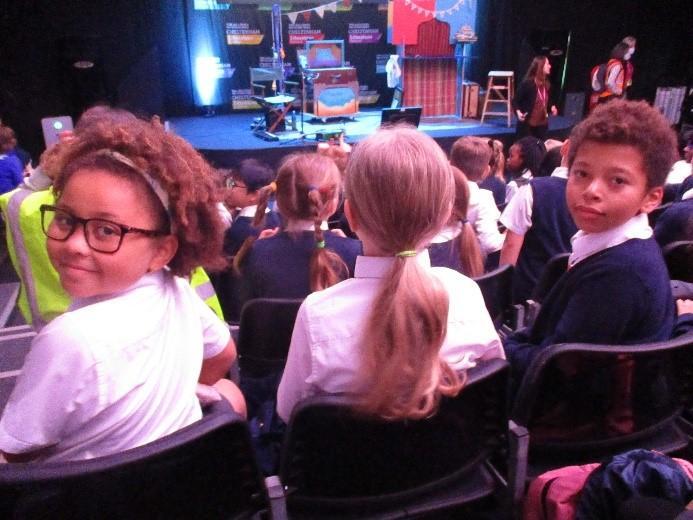
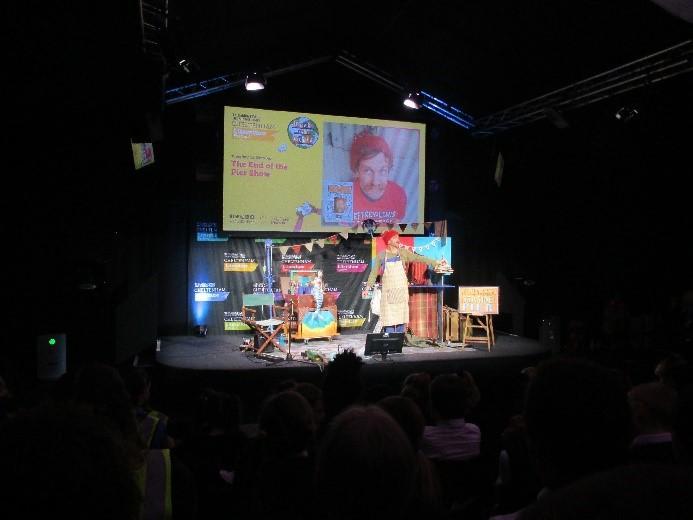
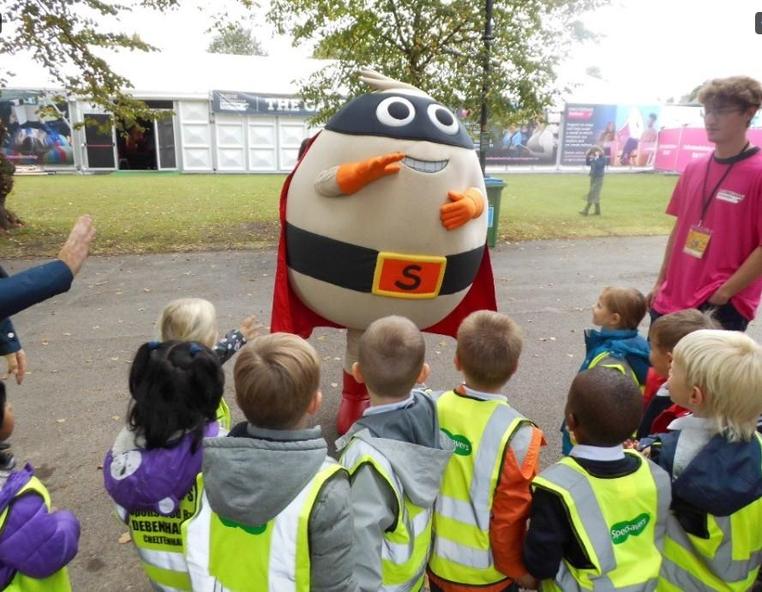
- Extracurricular opportunities – We provide a wide range of additional experiences for the children to inspire them and add wider context to their learning. This also enables us to seek out and develop the talents in every child. These experiences include trips to the Cheltenham Literature Festival to see authors speak and participate in author-led workshops, author visits, ‘Big Write’ events, mock trial events, creative writing university workshops, poetry and short story book publishing, writing competitions, debating clubs and school productions.
These aspects are expanded further in our teaching and learning policy.
How we plan for progression in writing at St Gregory’s:
At St Gregory’s, our curriculum is shaped by high-quality, inspiring texts and thoughtfully chosen year-group themes. Our writing curriculum is coherently structured and progressively sequenced so that pupils build on their prior learning and deepen their knowledge, understanding and skills over time. This ensures their writing development is meaningful and purposeful, with strong connections made both within writing itself and across all areas of the curriculum. To ensure progression, the writing subject lead works closely with each year group teaching team to plan curriculum coverage and ensure the correct progression of skills and vocabulary is integrated at each stage of learning, preparing children for the next stage in their development.
Writing is taught daily throughout the school year, and children are provided with further opportunities to develop their writing skills across the curriculum in nearly all subjects. These experiences are often rooted in hands-on, meaningful activities that stimulate thought, creativity and purposeful communication.
We recognise that the foundations for becoming an author are laid in the Early Years Foundation Stage through all seven strands of the Early Years Framework—particularly within Literacy, Communication and Language, and Personal, Social and Emotional Development. To be ready for the next stage in their education, the starting point that we strive for every child to have upon entry to Year 1, and in working towards the aims of the National Curriculum, is that they can:
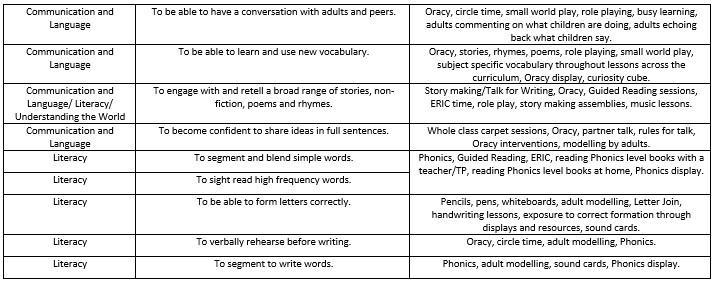
These secure foundations ensure that all children begin Year 1 ready to access the National Curriculum for English, confident in their identity as emerging authors and equipped with the early skills needed to flourish as writers.
Writing curriculum coverage
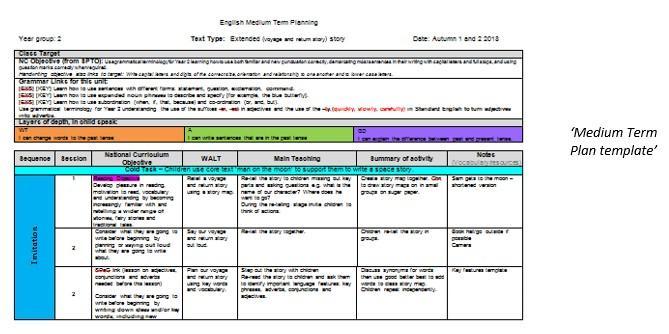
Our writing curriculum coverage is based on the National Curriculum 2014 PoS. At the start of each new unit, teachers identify the objectives that will be taught and insert these onto their medium term plans. These are broken down into WALTS for each lesson to ensure coverage of each objective. The medium term plan gives a brief outline of the main teaching and learning that takes place in lessons. Many of the objectives will be recapped/repeated throughout the year to ensure skills and knowledge have been embedded.
Progression of Vocabulary
Vocabulary, at an age appropriate level, is paramount to the children’s understanding and ability to articulate their intent and enable questioning. It is, therefore, a key consideration in writing planning. Key subject vocabulary is introduced at the appropriate time, building on prior knowledge.
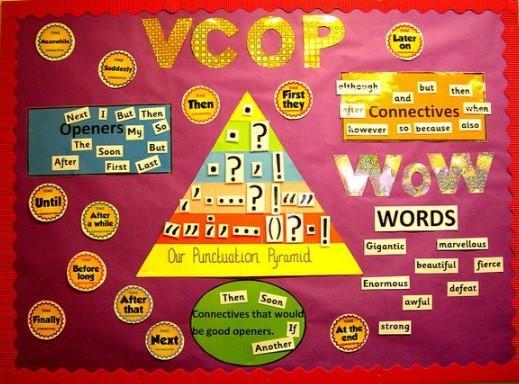
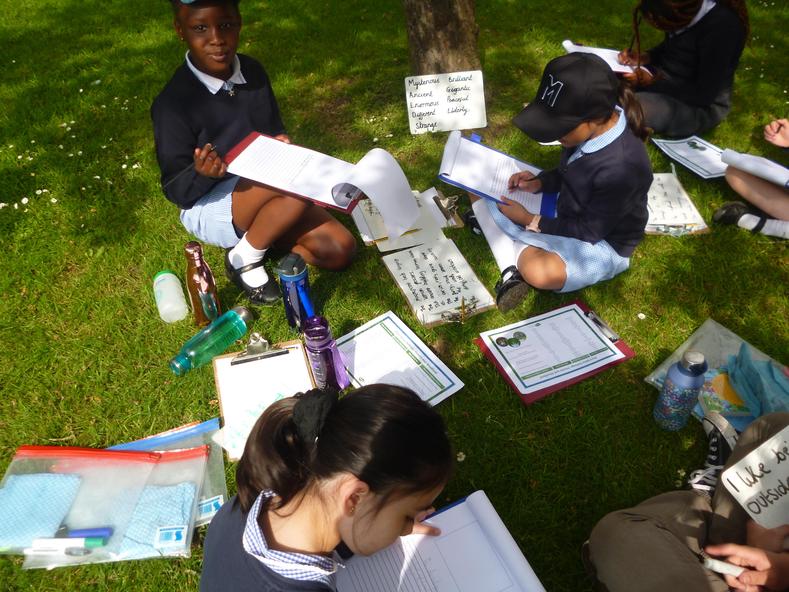
We also place great emphasis on developing children’s vocabulary and have developed a culture where children are not afraid to try out new words. Lots of classrooms have vocabulary walls which aim to inspire children to use more sophisticated and interesting vocabulary in their writing.
Planning
We have created a bespoke writing curriculum which we believe best suits the needs of our school. This curriculum draws on a variety of approaches and is carefully matched to pupil’s changing requirements as they progress through their writing journey.
In EYFS, children are encouraged to write for a range of purposes, both during independent play and in structured adult-led sessions through the ‘Drawing Club’ approach. Each week, Drawing Club introduces children to a new story via a book, non-fiction text, cartoon or short video. After exploring new vocabulary, children are guided to draw their own ideas, which they then bring to life through writing. Building on their early mark-making journey, they use their phonics knowledge to ‘sound out’ words and apply the handwriting skills they have learned to write simple words, captions and sentences. Sound mats and visual supports help children develop independence and confidence in their writing. We believe that this drawing club approach nurtures our children into confident storytellers, laying the foundation for a lifelong love of writing.
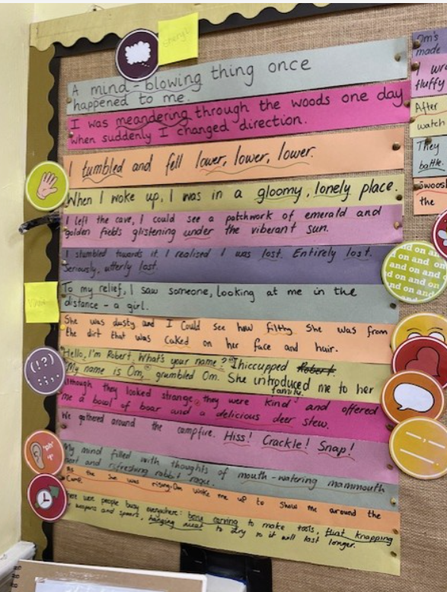
In KS1 and lower KS2, our writing lessons are delivered using the ‘Write Stuff’ approach, which aligns closely with the needs of our children and supports the development of vocabulary, sentence structure and creativity. Our curriculum is fully aligned with the National Curriculum Writing Programme of Study and provides a progressive mastery framework. Writing is taught through carefully planned, whole-class lessons designed to develop both foundational transcription skills and creativity. A clear progression of writing skills has been mapped out by our writing subject leader and all writing units are tailored to ensure that progression is explicit and coherent. To make learning accessible for all pupils, key concepts are broken down into manageable steps, with additional resources, scaffolding or adult support provided where necessary. We use ‘Widget’ symbols, visual prompts, memory aids and teacher guidance to further reinforce understanding. All KS1 and lower KS2 classrooms feature ‘Sentence Stacking’ walls, celebrating progress and providing a visual reference for key vocabulary, sentence structures, and grammar, supporting children in applying these skills independently in their writing.
In addition to daily writing lessons, children in EYFS and KS1 participate in daily phonics sessions, where they revisit previously taught grapheme-phoneme correspondences (GPCs) and continue to develop their understanding of the alphabetic code. These sessions are delivered using the Unlocking Letters and Sounds programme. Each phonics session includes dedicated encoding and dictation practice, enabling children to strengthen their spelling skills and apply them in their writing.
In Upper KS2, we have developed a bespoke approach to the teaching of writing, drawing on elements of the Write Stuff approach, Talk for Writing and other high-quality methods. Most units are structured in three phases:
- Exploration and Analysis – Pupils begin by exploring the features of the target genre and analysing a model text, developing their understanding of structure, language, and purpose.
- Guided Construction – Children then start to construct their own texts, supported by teacher modelling, scaffolding, and discussion to strengthen their skills and confidence.
- Independent Creation – The final stage allows children the freedom to create a text of their own choosing, applying their learning independently and making deliberate authorial choices.
- This approach prioritises the development of independence and creativity, enabling pupils to make informed writing choices and demonstrate the full extent of their skills and abilities as confident, reflective writers.
At the beginning of each unit, teachers identify objectives to be taught and compile a medium term plan. A medium term plan gives a brief outline of the main teaching and learning that takes place in a unit of work. It makes clear the objectives being taught in the unit and the target the class will be focusing on. The medium term plan makes it clear what is taught in each individual lesson.
Big Write
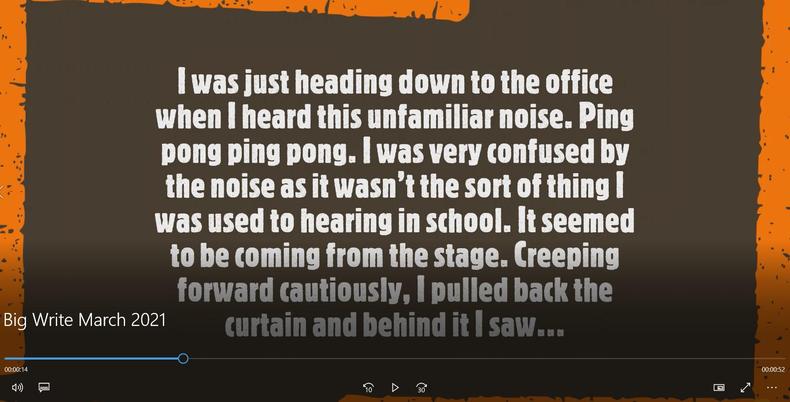
To show progression of writing throughout the school, each child has a ‘Big Write’ book. Children in years 1 to 6 complete three pieces of quality, independent writing in this book every year and EYFS children write one piece. Writing is unscaffolded and focuses on a different text type to the one being studied in children’s current writing lessons.
Spelling, Punctuation and Grammar

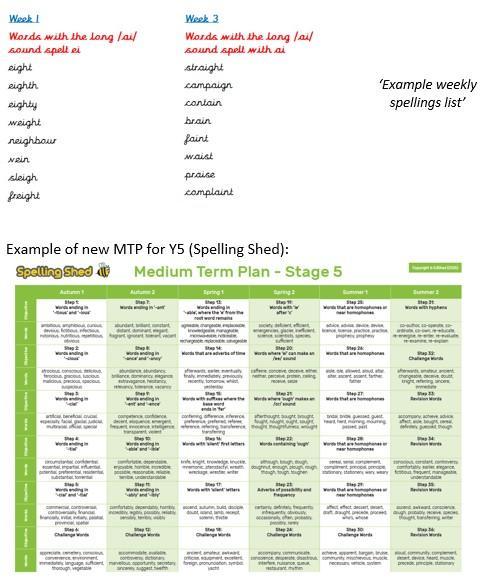
Spelling, punctuation and grammar are cross-curricular skills and are taken into consideration in all lessons. In addition, EYFS and KS1 children are taught spellings through their daily phonics lesson using the ULS Scheme. From January of Year 2, children begin to study the statutory spelling patterns outlined in the National Curriculum. In KS2, spelling is assessed weekly. It is taught three times a week in LKS2 and twice a week in UKS2. Word lists have been created for each year group which follow the National Curriculum and outline what should be taught on a week-by-week basis. These include the words from the statutory word-lists for KS2. They also group words according to spelling patterns to aid teaching, learning and progression across the school. Spelling sessions explore the weekly word list and focus on cognitive and metacognitive strategies for learning them, including pattern-spotting and the use of mnemonics.
Year 5 and Year 2 are trialling a new spelling scheme – Spelling Shed, in the hope that we will roll this out to all year groups from September 2026. ‘The Spelling Shed Scheme - Our spelling teaching scheme is the most up-to-date scheme available based on cutting edge research into the teaching of spelling.
Based on phonics, morphology and etymology, it includes main teaching inputs, which can then be followed up with additional activities that can be carried out immediately after the input during an extended session or revisited throughout the week in order to consolidate the learning further.’
https://www.spellingshed.com/en-gb
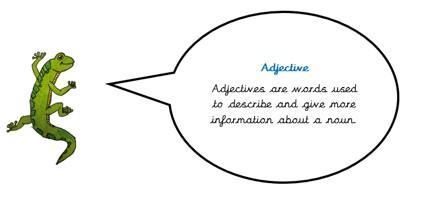
In KS2, grammar lessons are taught through a combination of discrete lessons and also through usual writing lessons. We aim to teach grammar in context as far as possible and we ensure grammar is taught at least fortnightly. To support grammar learning, we have created our own stem sentences for grammatical terminology to ensure consistency throughout children’s learning journey.
Handwriting
We aim for our pupils to develop a neat, legible, and fluent handwriting style using continuous cursive letters, ensuring that handwriting does not impede creative or mental thinking. Handwriting is recognised as a cross-curricular skill and is considered in all lessons; however, it is also taught discretely through the Unlocking Letters and Sounds handwriting programme. Children receive two taught handwriting sessions per week in KS1 and KS2. In EYFS, pupils have one formal handwriting session per week, supplemented by adult-supported practice during Drawing Club later in the week, allowing them to consolidate and apply their learning in a creative context. More information can be found in our Handwriting Policy.
Support for additional needs in writing
We recognise that some pupils may require support in particular lessons or tasks. Support is planned mindfully and tailored to the needs of each pupil. Teachers are flexible in their approach to planning support and intervention and recognise that specific additional needs do not necessarily need support across the entirety of the curriculum.
Typical support in place within writing includes:
- deliberate talk partner choices and seating arrangements,
- targeted questioning,
- pre-teaching of key vocabulary and concepts,
- paired and group activities,
- word maps and other relevant resources,
- writing frames and more structured boxing up opportunities,
- shared writing and group writing,
- the use of assisted technology such as dictation software and word processing,
- support in lessons from the teacher and teaching partner.
Writing intervention groups are in place for children who need significant support. Where children are withdrawn for writing interventions, we endeavour for them to be removed from different areas of the curriculum each time so they continue to receive their broad and balanced curriculum.
Children requiring a number of interventions join a group called a ‘high needs’ group – these children have all been interviewed to understand which subjects are their favourite and we work hard to ensure they are not removed from these lessons, wherever possible.
Planning to challenge in writing
As a school, we have developed a working descriptor for greater depth learning which is used across the curriculum. Through teaching for mastery, all children are exposed to opportunities for greater depth thinking. A child who is learning at greater depth can consistently:
- apply their learning to different contexts, identifying relationships within the subject and between other areas of the curriculum;
- work independently, showing resilience;
- apply their skills and knowledge consistently and fluently;
- explain and reason using accurate vocabulary;
- show curiosity and take responsibility for deepening their own learning by asking questions;
- teach others what they have learnt in a sensitive and thoughtful way to enable them to learn too.
We recognise that a child will often show a particular gift or talent in specific subjects rather than across the whole curriculum. In keeping with this, we understand that children may show greater depth skills across their writing in general or may show elements of greater depth in a particular writing objective or in one particular genre. For a child to be assessed as a greater depth writer at the end of year 6, we would need to see secure evidence of children meeting all ‘pupil can’ statements at both the expected and greater depth standards of attainment.
How are staff skilled to teach in writing
Whole staff training takes account of training in curriculum drivers such as metacognition, retrieval, growth mindset, vocabulary building, oracy, reading, teaching for mastery and how to support and challenge.
Training specific to writing is offered in response to staff needs and is based upon staff audits. It is delivered in groups or 1:1. Subject leadership time is given for this to take place.
Writing subject leaders are passionate and knowledgeable about their subject and undertake regular CPD to ensure their knowledge and understanding remains current and to share best practice with other writing subject leaders in the local area. Writing staff meeting time has been allocated and provides a chance for the subject leader to share their knowledge and passion and inspire the wider staff team. In recent years, our writing leads have delivered training on effective modelling, strategies for teaching spelling, fine motor and handwriting and how to effectively and accurately assess writing.
Impact
At St Gregory’s, we continually reflect on the impact of our writing curriculum on the whole school community, ensuring it helps children know more, remember more and prepares them to be the best they can be as righteous global citizens.
To assess a child’s journey towards becoming an author, we use a range of assessment methods to ensure that both the intended curriculum and its implementation are having a meaningful impact. Assessment at St Gregory’s is both qualitative and quantitative, enabling teachers to evaluate children’s knowledge, understanding and learning characteristics through formal and informal methods. This information informs future curriculum planning and teaching strategies.
Formal Assessment:
- English, as a core subject, is formally assessed three times a year against National Curriculum objectives. We use a trust-wide assessment framework to measure attainment and progress, with judgements recorded in our in-house tracking system, Insight. Children are assessed as working below, at, or above age-related expectations, supported by evidence such as classroom observations and work in books. Subject leaders provide guidance and cross-phase moderation takes place when required. Full details are outlined in our Assessment, Recording, Reporting and Tracking (ARRT) Policy.
Use of Data:
- Data is used strategically to guide subject development and CPD. It helps identify strengths, areas for improvement and gaps within the writing curriculum and across other subjects. This ensures support and interventions are targeted and allows for identification of trends within particular groups of pupils so that whole-school practice can be adapted to meet emerging needs.
Pupil Engagement and Self-Regulation:
- We aim for every child to see themselves as a writer and to articulate the skills and knowledge they have, both within writing and across the wider curriculum.
- Children are encouraged to become self-regulated learners, able to discuss their strengths and areas for development and to motivate themselves using strategies such as the Learning Pit, self and peer assessments and metacognition techniques. These approaches help children apply their learning now and in the future, supporting their personal ambitions.
Developing Righteous Global Citizens:
- Through our writing curriculum, children are supported to become righteous citizens who have high ambitions, are economically active and contribute positively to society. They recognise the value of the gifts and talents of others and are empowered to challenge social injustice both now and in the future.
Monitoring and Leadership:
- Subject leader time is allocated throughout the year to monitor impact. School leaders receive headline reports and triangulate these with their own monitoring. Members of the Governing Board attend Key Area Team (KAT) meetings to understand subject implementation and impact. Formal monitoring by the Curriculum Committee occurs annually, including reports and pupil conferencing, allowing for rigorous triangulation of evidence and support and challenge at multiple levels.
This comprehensive approach ensures that our writing curriculum is effective, aspirational and impactful, fostering confident, skilled writers who are equipped for life as thoughtful, engaged, and capable members of society.
See Writing Vision for more information
Cheltenham Literature Festival |
||
 |
 |
 |
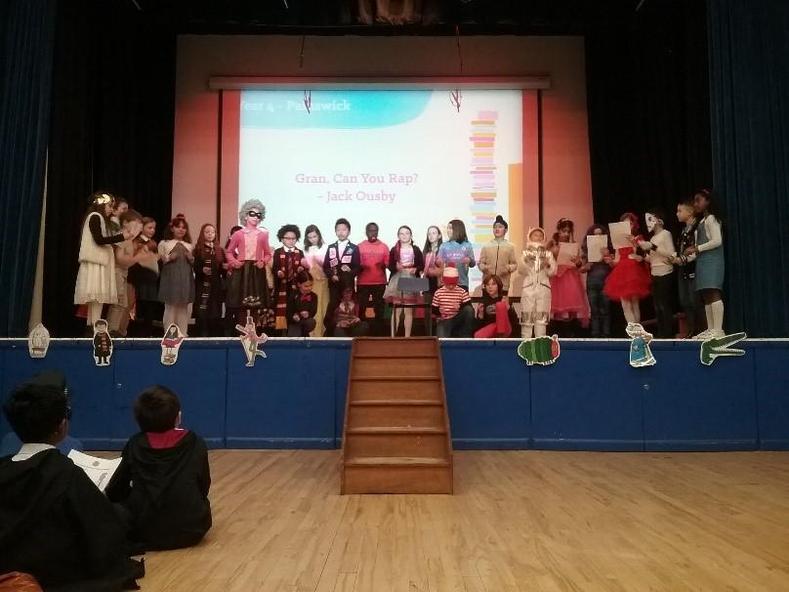
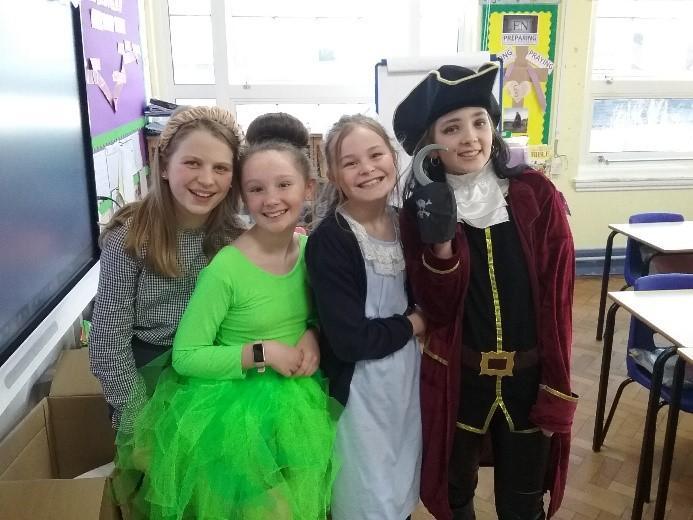
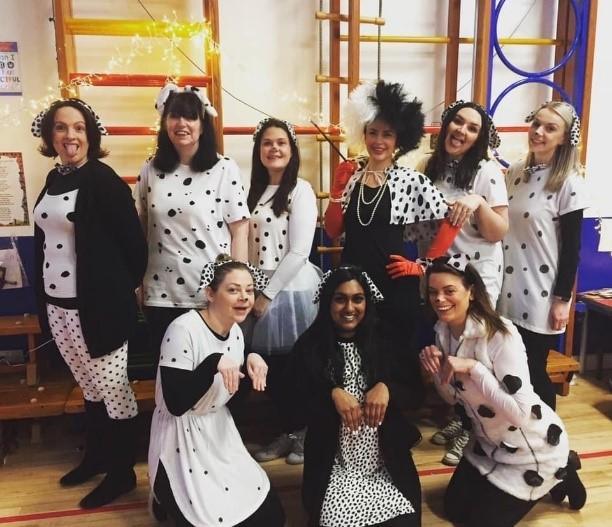
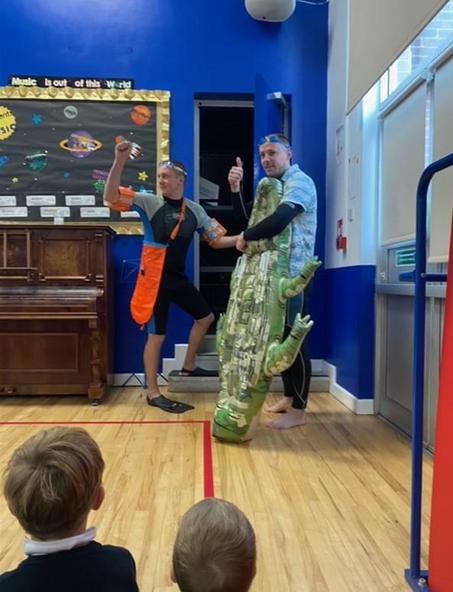
World Book Day
|
||
|
Performing poetry on stage |
Dressing up |
The teachers get involved too |
BIG Write!
|
||
|
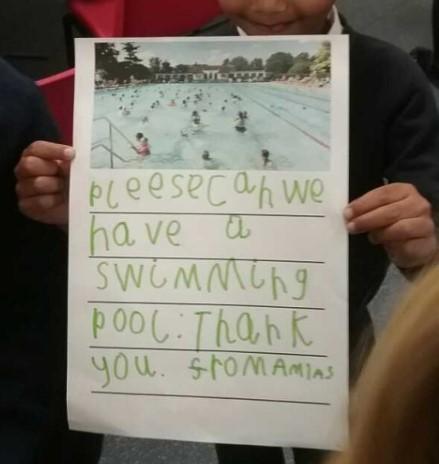
We wrote persuasion letters to the Governors and Mrs Blanch to ask for a swimming pool. |
|
|
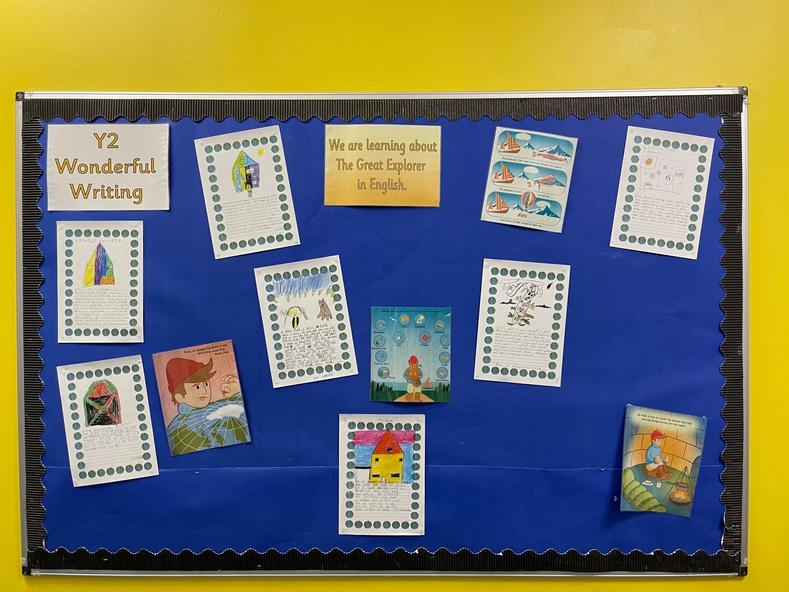
Writing Display
|
||
|
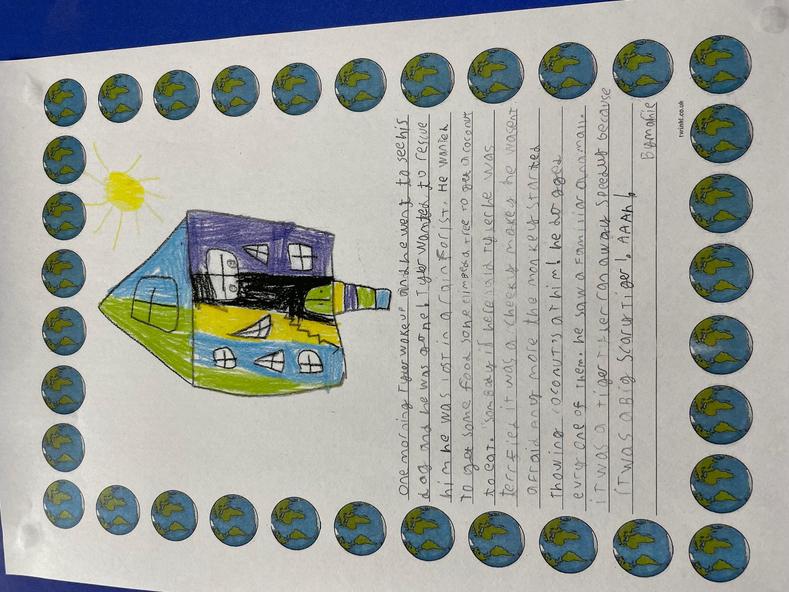
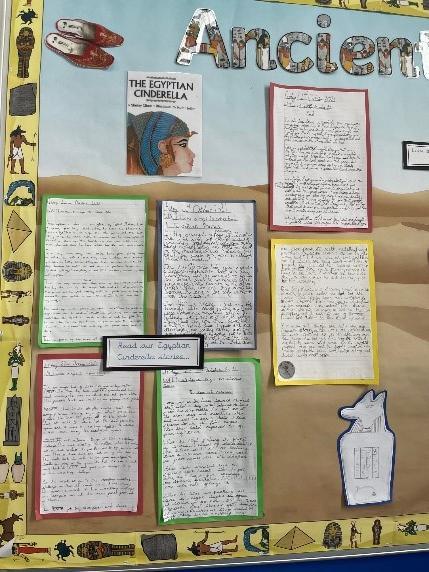
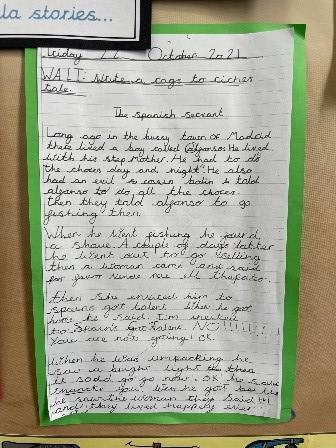
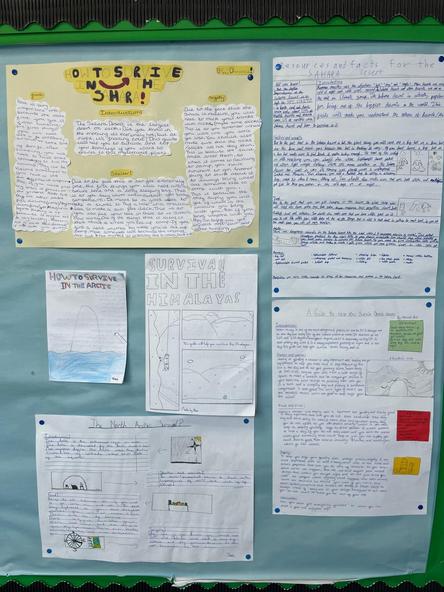
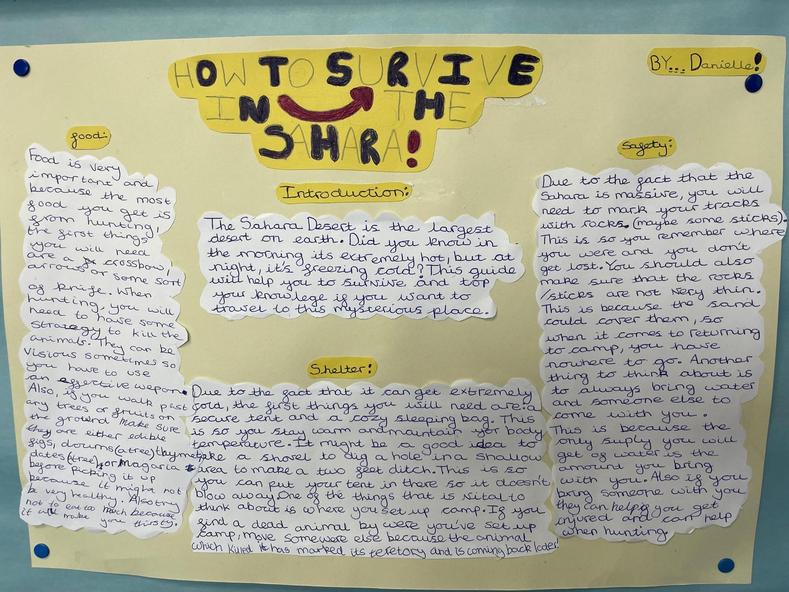
Explores topic based writing |
Ancient Egyptian topic based writing |
Presenting facts in a variety of ways |
Working Walls
|
||
|
Spelling, punctuation and grammar support |
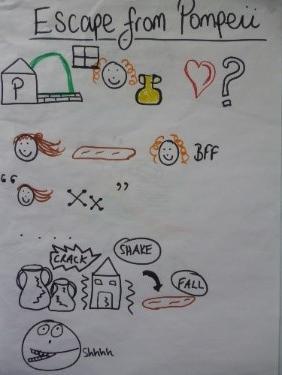
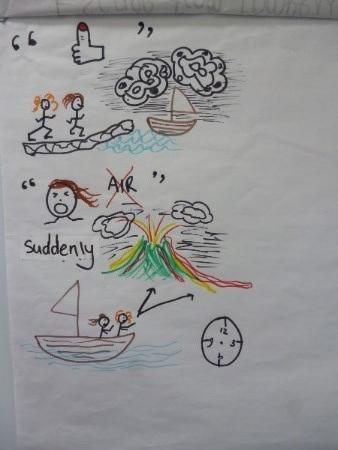
Story map |
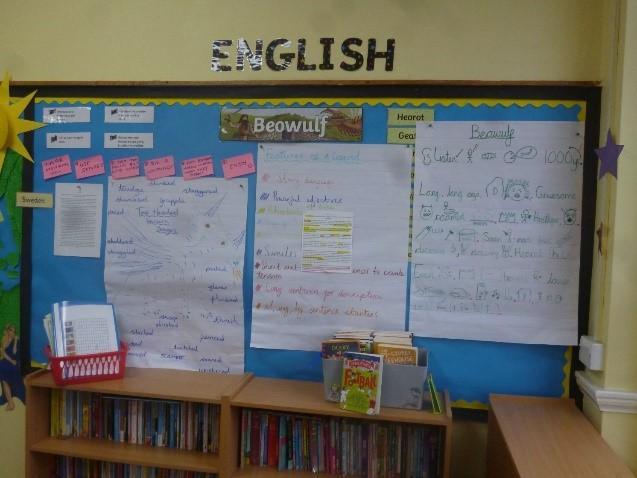
Working wall |