The Catholic School of
St Gregory The Great
St Greg's Curriculum
Curriculum Subjects
- Art & Design Curriculum
- Computing Curriculum
- Design Tech Curriculum
- English Writing Curriculum
- English Reading Curriculum
- English Phonics/Early Reading Curriculum
- Geography Curriculum
- History Curriculum
- Modern Foreign Languages Curriculum
- Mathematics Curriculum
- Music Curriculum
- Oracy Curriculum
- Physical Ed Curriculum
- Learning for Life Curriculum
- Religious Ed Curriculum
- RHSE Curriculum
- Science Curriculum
 |
 |
 |
 |
Intent
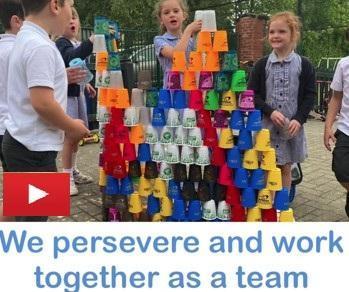 |
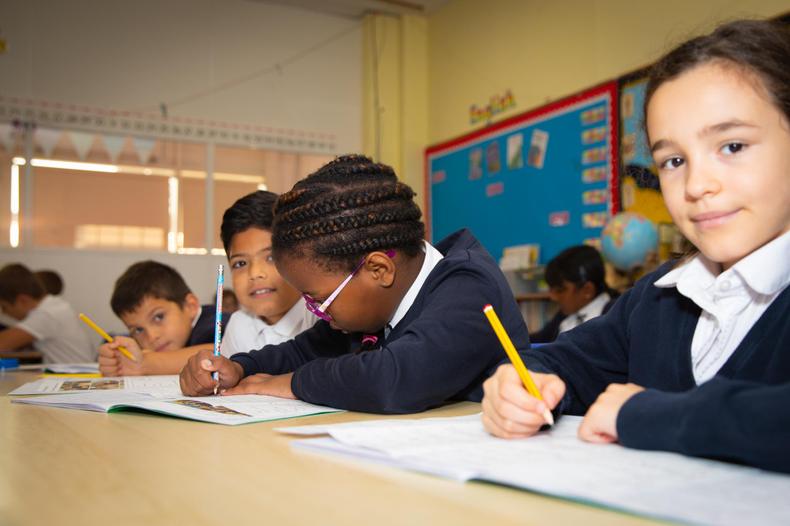
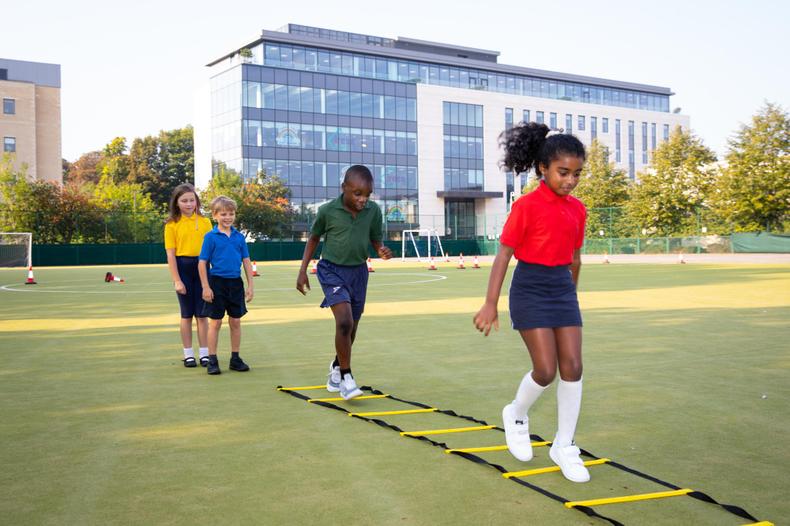
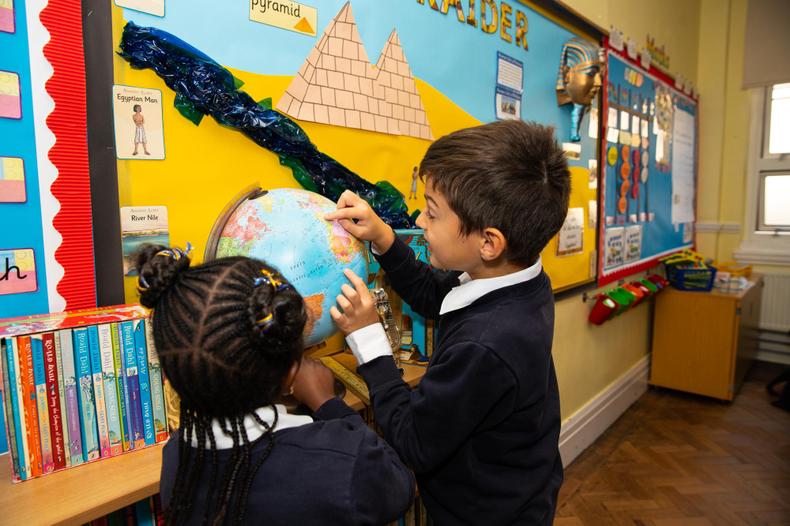
At St Gregory's, we strive for academic excellence. In doing so we have a great deal of fun along the way! Take a look at some of our curriculum drivers in action and see what is important to us… |
Vision
We aim to foster a love of learning, encourage curiosity, and develop confident, respectful, and creative individuals. We recognise that the curriculum extends far beyond the learning that takes place in formal classroom lessons. It encompasses everything a child experiences during their time at our school and shapes the person they are becoming - their talents, their needs, and their aspirations for the future. Every experience provides a learning opportunity that helps prepare our children for life in modern Britain as global citizens, viewed through the lens of Catholic life.
At St Gregory's, our curriculum is ambitious, inclusive and focuses on the personal development of each and every child. We recognise that everyone has their own unique, God-given talents and so we teach a broad and balanced curriculum that allows each child to showcase these gifts. Our curriculum is progressive and builds on prior knowledge, understanding and skills so that children make connections with their learning, recalling what they have learnt in order to use it in different situations. We nurture our whole school community academically, spiritually, emotionally, morally and socially. This ensures our children develop cultural capital and become compassionate, responsible citizens who contribute positively to society. We provide creative and engaging opportunities that inspire and motivate our children to become lifelong learners with aspirations to be the very best they can be.
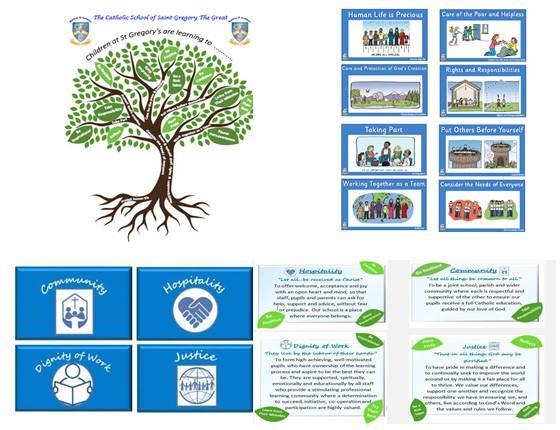
Our Early Years Curriculum, the National Curriculum, and the knowledge and skills children gain through formal teaching sit alongside our wider vision for the characteristics of the learners we aim to develop. While we strive for academic excellence, we are also unapologetic in the emphasis we place on developing the personal qualities we value in every member of our school community. These characteristics are rooted in Catholic Social Teaching and woven throughout all we do. The qualities outlined in our learner profile, which link with our four foundational values, are of great importance to us and therefore permeate our entire curriculum.
Implementation
Statement of Implementation
The Early Years Foundation Stage (EYFS) Framework and the National Curriculum form the core of St Gregory’s curriculum, mapping out the knowledge and skills we want our children to learn and experience in each area or subject. These can be found in the EYFS Framework and the National Curriculum Overview and Programmes of Study.
Beyond this, our wider curriculum includes a variety of approaches designed to develop the whole child:
- Inclusive teaching - Teaching for a secure understanding ensures that the curriculum is accessible to all. Lessons are broken into small, manageable learning intentions, with a focus on deep understanding. Individual support and intervention are provided to meet each pupil’s needs, enabling all children regardless of their backgrounds to reach their full potential through careful adaptations. This ensures that we do not limit the expectations for disadvantaged pupils or those with SEND. We pick up any gaps immediately and ensure that are children are ready for the next stage of learning.
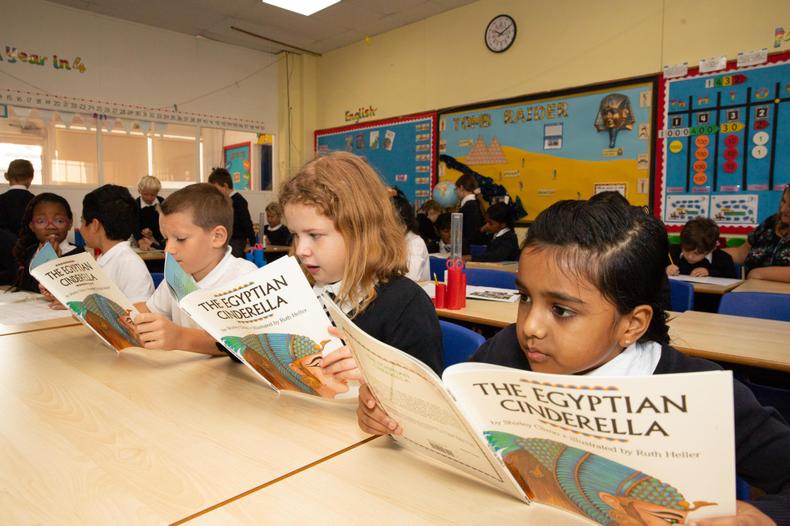
- Oracy, vocabulary, and reading for pleasure - We provide a language-rich environment that emphasises Oracy and the development of a rich vocabulary, including technical terms relevant to each child’s learning progression. Talk is central to our curriculum, and Oracy activities are embedded throughout the day to give children regular opportunities to practise their speaking and listening skills. Reading is integral to our curriculum design, with daily opportunities to hear and engage with a range of texts, broadening vocabulary and fostering a love of reading.
- Catholic Social Teaching - These principles guide children to live through the lens of Catholic values. They help children connect their learning to the world around them and encourage them to become contributors, rather than takers, in society. Catholic Social Teaching is woven into subject lessons and reinforced through discrete lessons, deepening children’s understanding of the wider context of their learning and empowering them to challenge social injustice.
- Metacognition and self-regulated learning (including growth mindset, learing pit and restorative practice) - Children are supported to manage their emotions, develop a positive sense of self, set aspirational goals, and build confidence in their abilities. This is reinforced through our St Gregory’s learner profile and growth mindset approach. Both help enhance children’s awareness of how they learn, the emotions linked to learning, and the transferable skills needed to achieve their potential. Teachers guide pupils to plan, monitor, and evaluate their learning, developing metacognitive knowledge and strategies that foster independent learning. Restorative practice strengthens relationships, encourages problem-solving, and builds resilience, providing a solid foundation for learning. Self-regulated learners understand their strengths and weaknesses, and can motivate themselves to engage with and improve their learning.
- Retrieval opportunities - Learners are given time to embed knowledge by transferring it from working memory to long-term memory. We make deliberate connections between current and prior learning, using our St Greg’s retrieval strategies such as; quizzes, brain dumps, oracy activities, and challenging discussions to reinforce and recall learning.
- Extracurricular opportunities for personal development - We offer a wide range of additional experiences that inspire children, provide broader context for learning, and help uncover and develop individual talents. Examples include enquiry based trips, carol singing in the community, science and literature festivals, clubs, YMM assemblies, liturgies, Mass, chaplaincy, workshops, competitions, school council, residential trips, outdoor learning, whole school careers fair and school productions.
How the Curriculum is designed in EYFS:
The curriculum in EYFS is delivered in accordance with the Statutory Framework for the Early Years Foundation Stage and supported by non-statutory guidance, Development Matters.
When planning and guiding activities, we ensure that the characteristics of effective teaching and learning underpin all areas of learning and support children to be effective and motivated learners. These characteristics sit alongside and feed into our St Gregory’s Learner profile which outlines characteristics that are valuable to us as learners and can be found above.
The characteristics of effective learning are:
Playing and exploring – engagement
- investigate by finding out and exploring
- experience things through playing with what they know and enjoy and exploring new toys and activities
- are willing to ‘have a go’ and build up their confidence to try new things
Active learning - motivation
- are involved and concentrate
- keep on trying if they encounter difficulties
- enjoy achievements and develop a sense of pride
Creating and thinking critically - thinking
- have and develop their own ideas by using and developing their imagination
- make links between ideas
- develop strategies for doing things
Areas of learning and development
Learning in the EYFS framework is defined into seven areas: three prime areas and four specific areas. The prime areas underpin further learning in the four specific areas. These areas of learning and development address children’s physical, cognitive, linguistic, social and personal development. No one aspect of development stands in isolation from the others. All areas of learning and development are equally important and are all closely interlinked.
These are the prime areas:
- Communication and Language
- Physical Development
- Personal, Social and Emotional Development
These are the specific areas:
- Literacy
- Mathematics
- Understanding of the World
- Expressive Arts and Design
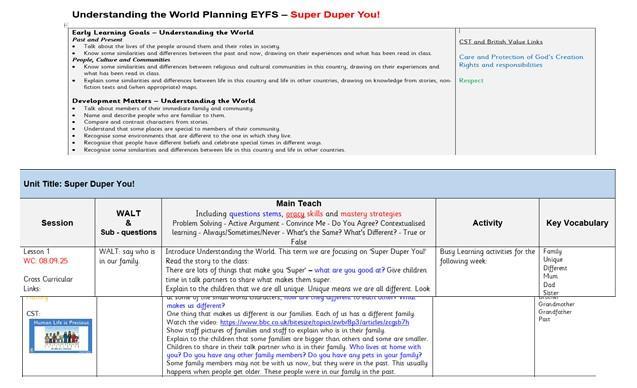
Our EYFS curriculum design includes six flexible themes that are tailored to meet the needs, interests and development of all children. Teachers carefully sequence learning with the help of Development Matters guidance and the EYFS Framework to support progression and depth of learning alongside assessment such as observations, talk and links with parents as a means to discover each child’s interests and gifts in order to provide challenging and enjoyable experiences that stimulate children’s interests in all seven areas. This ensures the delivery of a holistic, child-centred curriculum that is designed to give all children knowledge, self-belief and is delivered using challenging and enjoyable experiences. Our themes are driven by high quality texts. Encompassing texts into our themes captures children’s imagination, supports a deeper acquisition of language, vocabulary and knowledge as well as promoting a love of reading.
Our curriculum map is very fluid and is regularly reviewed to ensure that we provide rich and holistic experiences that meet our children’s needs and follows their interests.
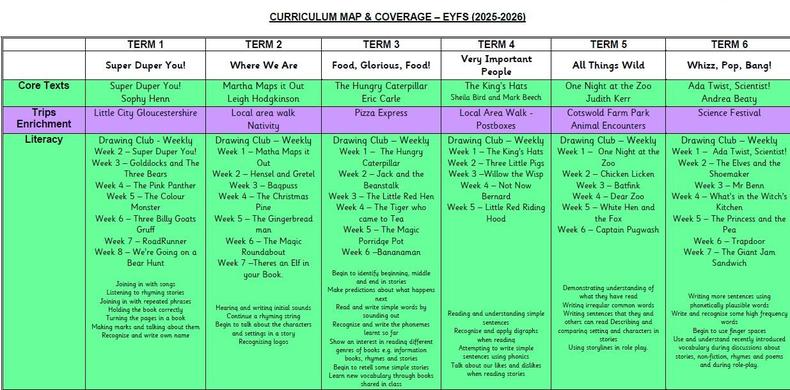
Below is an example of a medium term plan for one of the themes.
How the formal taught curriculum is designed in KS1 and KS2:
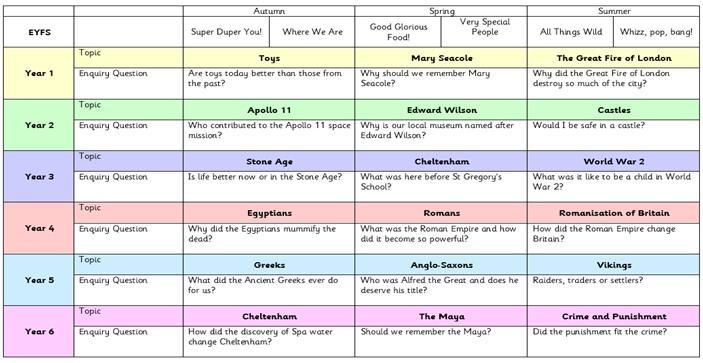
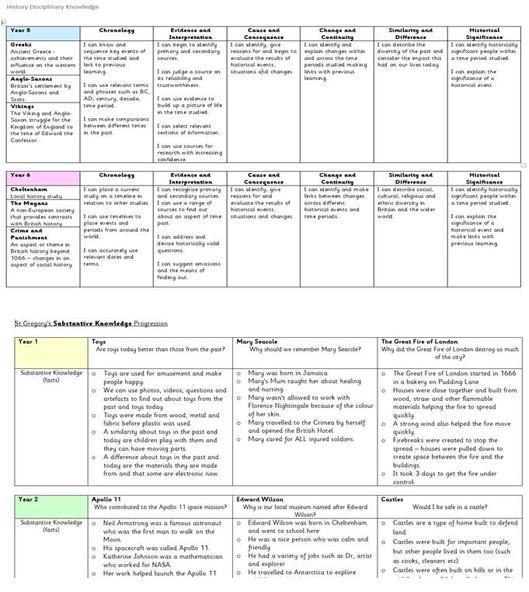
Curriculum leaders carefully sequence National Curriculum expectations across year groups to ensure full coverage and to provide explicit opportunities for pupils to revisit and deepen knowledge and vocabulary. Leaders have developed progression-of-skills documents to support teaching, learning, and assessment. These documents outline the key knowledge that children should secure in each year group. By enabling children to revisit and build on key skills as they move through the school, we ensure a coherent and progressive curriculum - one that helps children know more and remember more throughout their learning journey at St Gregory’s.
Oracy plays a vital role in the national curriculum, as strong speaking and listening skills underpin pupils’ ability to think critically, communicate clearly, and engage confidently with their learning. At our school, we place a strong emphasis on developing these skills through purposeful discussion, collaborative activities, and opportunities for pupils to express their ideas. Alongside this, we prioritise reading as a cornerstone of educational success, ensuring that every child has access to high-quality texts, daily reading experiences, and targeted support to build fluency, comprehension, and a lifelong love of reading.
We have termly topics that follow a clear enquiry-based approach, taking children on an engaging learning journey designed to help them answer their overarching enquiry question. Throughout each unit, pupils make meaningful links to prior learning and apply key disciplinary skills. They not only develop secure substantive knowledge but also deepen their understanding of what it means to be a historian or geographer, applying these ways of thinking in a range of contexts. At St Gregory’s, we also make purposeful connections between our topics and our Art and DT units where appropriate, enriching pupils’ creativity and understanding. Core subjects, as well as Computing and PE, are taught discretely to ensure progression and mastery within each discipline.
Parents as Partners
We are a relational school and we value the role of parents as children’s primary educators. We strive to build strong, positive partnerships with parents and carers to enhance each child’s learning, development, and experiences both at home and at school.
We achieve this by sharing information about each child’s progress, setting next steps collaboratively, and providing support, ideas, and guidance to help parents reinforce learning at home. Likewise, we encourage parents to share their unique knowledge of their child — including their characteristics, interests, experiences, likes, and dislikes. This insight helps practitioners create stimulating and engaging learning experiences that respond to each child’s individual needs and interests.
Parents are always welcomed into school and encouraged to discuss any concerns they may have. Communication takes place through a variety of channels throughout the year, including home visits, parent-teacher reviews, informal chats at the beginning and end of the day, questionnaires to enable a smooth transition, the child’s online learning journal (Tapestry), workshops, webinars, and ClassDojo. We firmly believe that strong relationships and the sharing of information lay the foundation for lasting partnerships with parents throughout a child’s time at our school.
Additional opportunities for practitioners to share children’s learning, development, and well-being with parents include End of Year Reports, Assemblies, Liturgies, Story-Making Assemblies, Stay and Play sessions, Parent Workshops, and our “Prepare to be Proud” events, which celebrates and showcases what the children have been learning at school.
Parents are also invited to actively participate in school life. They can assist with activities such as educational visits and reading, contribute their particular skills — for example, in cooking, art, or music — and share professional experiences, such as presenting at our Careers and Aspirations Fair. These contributions support children’s learning and provide further inspiration for their development.
To find out more about each subject please refer to the visions on each of the above subject pages.
Useful Information
- Assessment Recording Reporting And Tracking (Arrt) Policy2 -R0423.pdfPDF File
- British Values St Gregorys.pdfPDF File
- Cultural Capital.pdfPDF File
- Curriculum Policy.pdfPDF File
- EYFS Framework.pdfPDF File
- Foundation Vocabulary.pdfPDF File
- National Curriculum.pdfPDF File
- Teaching and Learning Policy.pdfPDF File